Cardamom is one of the world’s most treasured spices, celebrated for its bright, aromatic character and centuries of use in tea traditions. Native to the lush forests of southern India, its green pods release notes of citrus, sweet herbs, and gentle spice. In tea, cardamom brings warmth, depth, and elegance, creating a fragrant infusion that has long been enjoyed in rituals of hospitality, comfort, and mindful daily living.
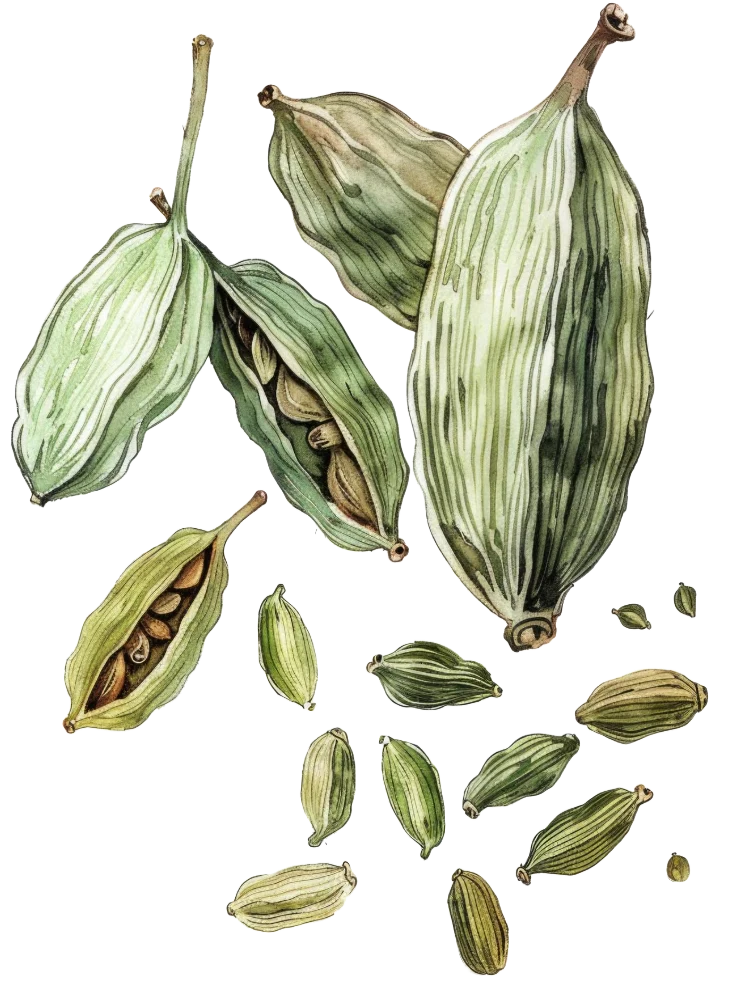
Cardamom is primarily cultivated in the misty hills of southern India, particularly in the states of Kerala, Karnataka, and Tamil Nadu within the Western Ghats mountain range. This biodiversity hotspot provides rich soils, abundant rainfall, warm temperatures, and filtered shade—conditions that closely resemble the plant’s natural forest habitat. Often called the “Queen of Spices,” cardamom has played an important role in regional trade, cuisine, and tea culture for centuries. Many plantations are interwoven with forest ecosystems, supporting traditional agricultural practices that balance cultivation with environmental stewardship.