Lakadong turmeric is a premium variety grown in the Jaintia Hills of Meghalaya, India. It is globally renowned for its exceptionally high natural curcumin content of 7% to 12%, which is up to four times higher than the 2% to 3% found in regular commercial turmeric. With a flavor profile that is gently spicy, woody, and slightly bitter, it brings depth and character to herbal tea blends. Traditionally used in daily wellness rituals and culinary traditions, turmeric is valued in tea for its comforting nature, radiant color, and connection to mindful moments of nourishment.
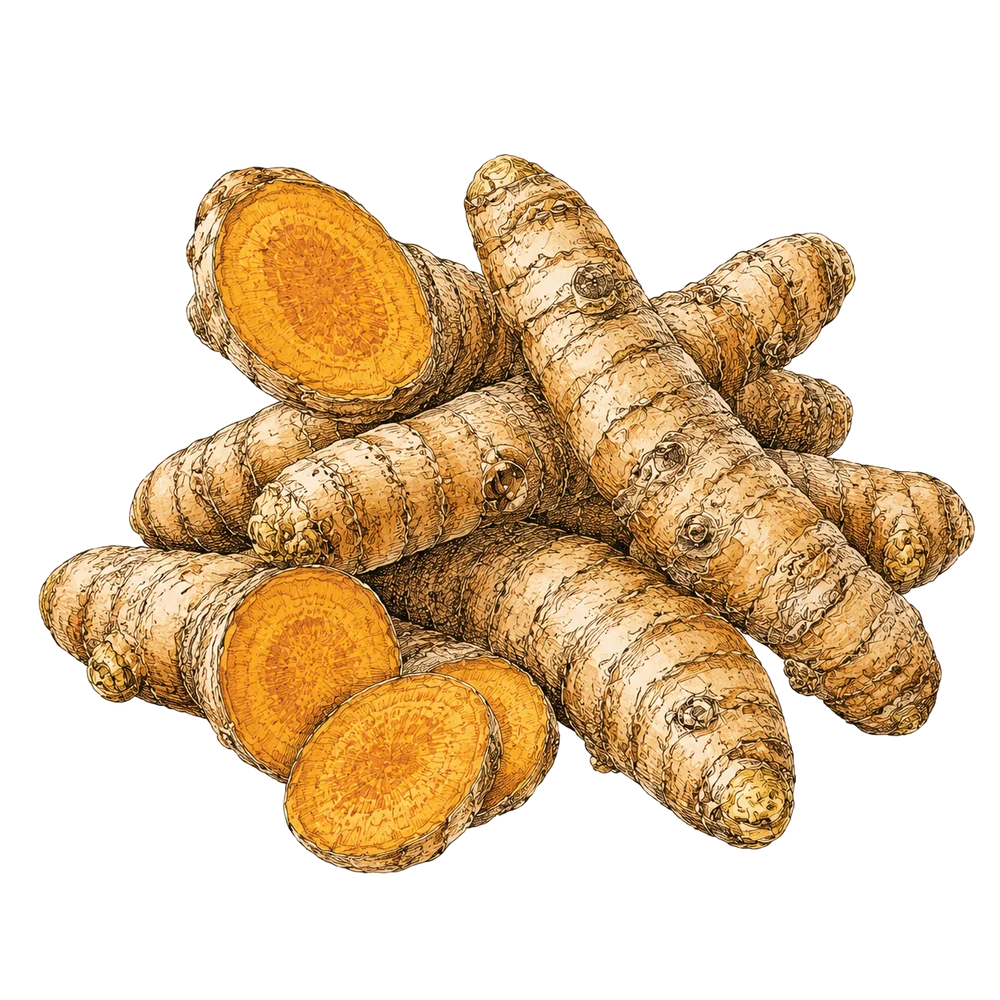
Turmeric is widely cultivated across southern and eastern India, particularly in Kerala, Tamil Nadu, Karnataka, Andhra Pradesh, Telangana, and Odisha. These regions offer warm temperatures, seasonal rainfall, and fertile, well-drained soils that support healthy rhizome development. Deeply woven into Indian agriculture and culture, turmeric has long been grown in smallholder farming systems alongside other crops. Its bright golden color carries symbolic significance in festivals, ceremonies, and daily life. Many cultivation areas also support diverse agricultural landscapes where traditional farming knowledge and biodiversity continue to coexist.