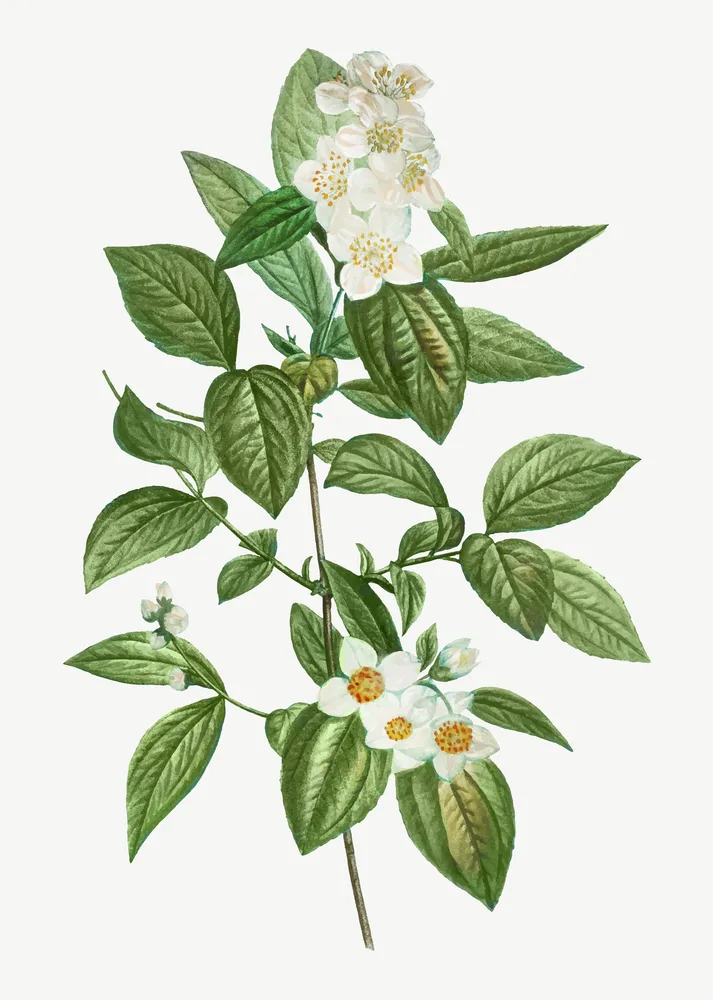
Jasmine is treasured for its delicate floral fragrance, soft sweetness, and timeless elegance in tea traditions. Most commonly used to scent green, white, or oolong teas, jasmine blossoms are harvested at peak bloom and layered with tea leaves to impart their natural aroma. Revered across Asia for centuries, jasmine brings a refined sensory experience that transforms an everyday cup into a calming and deeply aromatic ritual.
In India, jasmine is widely cultivated in Tamil Nadu, Karnataka, Andhra Pradesh, and parts of West Bengal. Warm temperatures, abundant sunlight, and well-drained soils create ideal growing conditions for healthy flowering plants. Tamil Nadu, particularly around Madurai, is renowned for producing highly fragrant jasmine varieties that are deeply woven into local culture. Beyond tea, jasmine flowers play an important role in festivals, religious offerings, and daily life. Their cultivation supports thousands of small-scale farmers while contributing to vibrant agricultural landscapes rich in pollinator activity and traditional horticultural knowledge.