Licorice root

Naturally sweet root adding earthy depth and lingering smoothness.

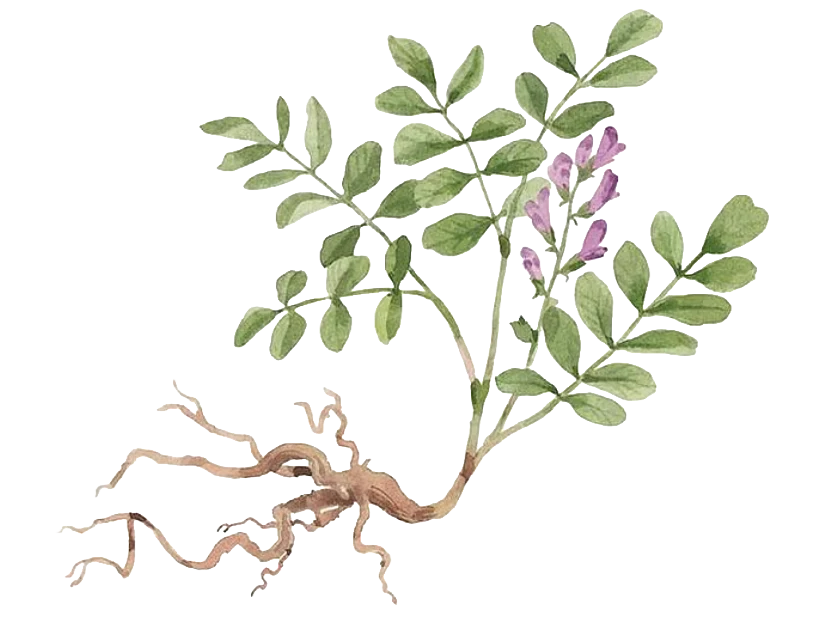
Licorice root, known in India as mulethi, brings a distinctive natural sweetness with warm, earthy and gently woody undertones. Long valued in Ayurveda and traditional herbal preparations, the root lends depth and balance to infusions while softening sharper spices and botanicals. Naturally caffeine-free, it is especially appreciated for creating smooth, rounded tea blends with a lingering sweetness that requires no added sugar.
Naturally Sweet by Nature
Licorice root contains glycyrrhizin, a naturally occurring plant compound responsible for its remarkably intense and lingering sweetness.
Softens Bold Tea Blends
Its rounded sweetness balances warming spices, brisk black tea and more assertive herbal ingredients without overpowering their individual character.
Naturally Free From Caffeine
As a pure botanical ingredient, licorice root contains no caffeine and can be enjoyed in calming herbal infusions throughout the day.
Rooted in Indian Tradition
Known as mulethi or yashtimadhu, licorice root has a longstanding place in Ayurveda and India’s traditional culture of herbal preparations.
Licorice root
A Lingering Rounded Finish
Its sweetness unfolds gradually across the palate, leaving a smooth, mellow finish with subtle earthy and woody notes.
Rich in Plant Compounds
Licorice root naturally contains glycyrrhizin, flavonoids and other botanical compounds that contribute to its distinctive character and traditional value.
Harvested for Mature Roots
The underground roots and runners are carefully lifted, cleaned, cut and dried before being prepared for tea and botanical blends.
Suited to Slow Infusion
A generous steep allows the dense root pieces to release their layered sweetness, creating a full-bodied and comforting herbal cup.

Origin Story

In India, licorice is associated primarily with northern regions, including Punjab and the sub-Himalayan tracts. These landscapes offer the deep, fertile, moisture-retentive soils required for developing the plant’s extensive underground roots. Sandy or loamy ground with good drainage and neutral-to-slightly alkaline conditions is particularly suitable for cultivation. As a perennial member of the legume family, licorice also participates in natural soil-nutrient cycles. Known locally as mulethi, the dried root holds an established place in Ayurveda and traditional household infusions, where its sweetness is used to harmonise stronger herbs and spices.

Licorice root

Quick Facts

Botanical Name
Glycyrrhiza glabra
Plant Type
Herbaceous perennial legume
Flavor Profile
Naturally sweet, earthy, woody, mellow, anise-like
Caffeine Level
Naturally caffeine-free
Best Time to Enjoy
After meals or as an evening herbal ritual
Common Tea Pairings
Ginger, cinnamon, fennel, peppermint, tulsi and black tea